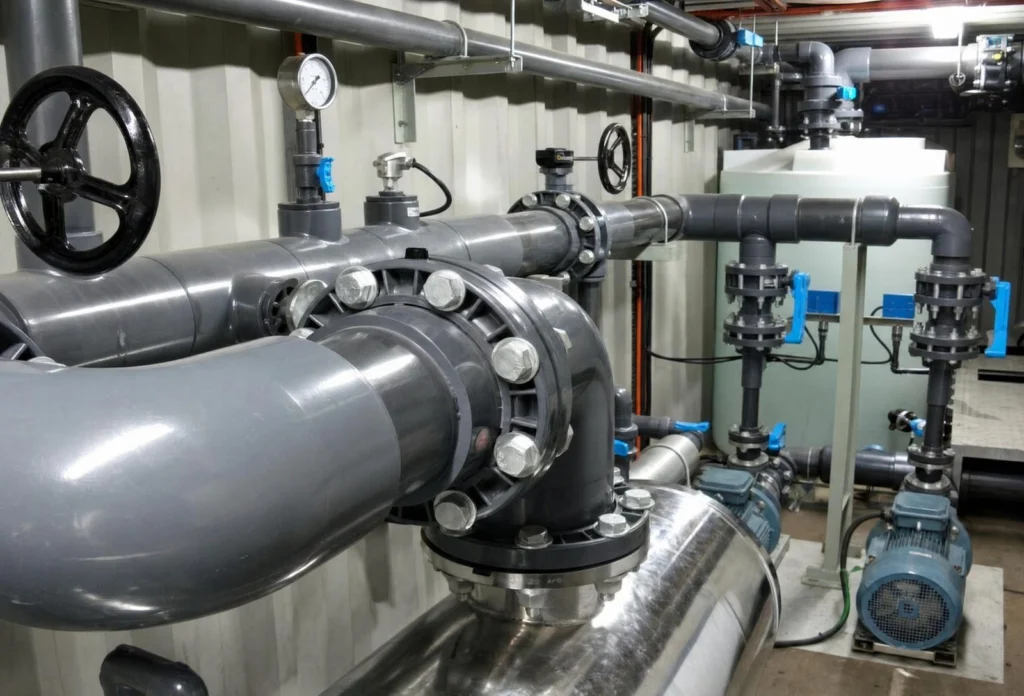

A treatment plant needs more than an occasional service visit. Reliable operation comes from routine observation, planned maintenance, meaningful records and a clear response when something changes. The facility manager does not need to become a process specialist, but does need to know who is responsible and what evidence shows that the plant is working.
Use this checklist to organise a discussion with your operator and maintenance provider. Adapt it to the installed process, equipment manuals, site procedures and consent requirements. It is not a set of universal operating limits.
Daily checks: look for changes
Start each shift with a handover and a review of outstanding alarms. Walk the designated safe route through the plant and record observations against the site’s normal condition. A trend is often more informative than an isolated number.
- Inlet and flow: record flow-meter readings and note unusual incoming colour, odour, temperature or production-related changes.
- Screens and collection: check for blockages, abnormal levels and material accumulation using the approved safe procedure.
- Pumps and blowers: note unusual noise, vibration, leakage, temperatures or electrical readings reported by installed instruments.
- Process condition: record the measurements specified by the process engineer, such as pH or dissolved oxygen where applicable.
- Treated-water side: check the required quality indicators, storage levels and reuse or discharge routing.
- Sludge and consumables: record removal, storage condition and stocks needed for uninterrupted operation.
The US EPA’s operator resources include customisable operator-rounds checklists. They are useful examples of structured recordkeeping; their regulatory references are for the United States, not substitutes for Indian site requirements.
Build a preventive maintenance schedule
Use the manufacturer’s intervals and the actual service conditions to plan maintenance. Calendar reminders alone are not enough: some tasks depend on operating hours or measured condition. Assign an owner, a due date and a completion record to each task.
| Review | What the manager should confirm |
|---|---|
| Each shift or day | Readings recorded, alarms addressed, abnormal conditions escalated and handover complete |
| Weekly review | Trends examined, standby readiness reviewed by authorised staff, overdue work and spare stocks checked |
| Monthly review | Laboratory results, maintenance completion, consumption, recurring faults and contractor actions reviewed |
| Planned service or shutdown | Equipment serviced to the approved schedule, instruments checked and restart responsibilities agreed |
These are management checkpoints, not prescribed servicing frequencies. A critical component may need attention sooner, and laboratory sampling frequency must follow the site’s approved monitoring plan.
Keep a log that supports decisions
A useful entry states the date, time, location, measurement, unit, operator and action taken. Record whether a figure came from an online instrument, field test or laboratory result. Include the sample location so that an inlet result is not accidentally compared with an outlet result.
Log maintenance work and process changes beside the operating data. If water quality changes after a cleaning event or a new production batch, that timeline helps the technical team investigate. Preserve the original readings and document corrections; do not fill gaps with assumed values.
Example of a useful escalation
“Outlet turbidity increased after the morning shift; inlet flow was also higher than usual. The operator informed the supervisor, followed the site’s off-specification-water procedure and requested a process review.” This is more useful than “water not clear”, because it gives timing, context and a recorded response.
Warning signs deserve investigation
Repeated high-level alarms, unexplained energy increases, frequent pump trips, persistent odour changes or deterioration in outlet quality should trigger a review. Avoid treating every symptom with the same chemical or control adjustment. Similar symptoms can have different causes.
Ask the operator to compare current conditions with the established baseline, check the relevant instruments and involve the process engineer where needed. The EPA small mechanical plants tip sheet reinforces the value of monitoring, maintenance and clear operating responsibilities.
Keep maintenance within the authorised procedure
Tanks, pits and chambers can present serious confined-space hazards. Entry and rescue must be handled only under the site’s formal procedures by trained and authorised personnel. Electrical work, moving equipment and chemical handling also require the appropriate isolation, competence and protective measures. A checklist is not permission to open, enter or adjust unfamiliar equipment.
For a facility manager, the useful checks are organisational: is the procedure available, is the contractor authorised, are hazards communicated, and is the responsible supervisor identified? Do not ask untrained staff to improvise repairs in order to keep the plant running.
What to include in an O&M contract
- Operator coverage, qualifications, training and relief arrangements.
- Routine measurements, laboratory testing and report responsibilities.
- Preventive maintenance scope and exclusions.
- Consumables, spares and replacement approval arrangements.
- Sludge-handling responsibilities and records.
- Alarm escalation, response expectations and emergency contacts.
- Monthly performance review and action tracking.
Separate process performance problems from equipment defects when reviewing service reports. Both matter, but they may require different expertise and corrective work.
Start with a baseline review
Gather the process drawings, equipment list, recent lab reports, operating log and maintenance history. Identify the three most frequent issues and who currently owns each one. That makes an operation and maintenance review with Enrec Engineers more focused.
If the plant is receiving wastewater different from its original design basis, revisit the STP and ETP selection fundamentals. Maintenance cannot by itself correct a process that no longer matches the inlet load.