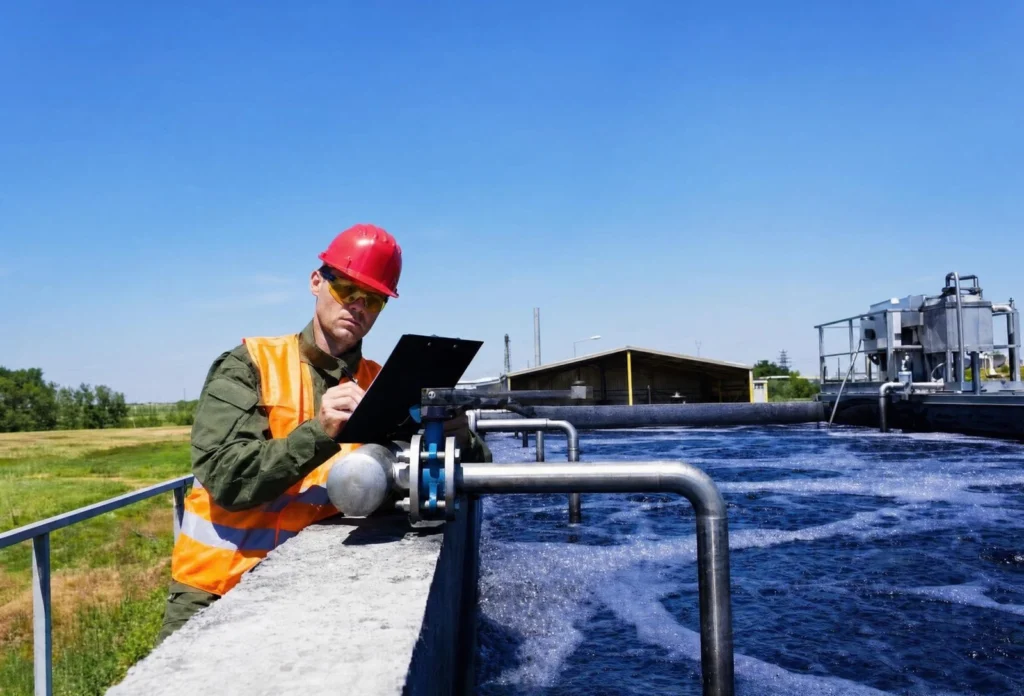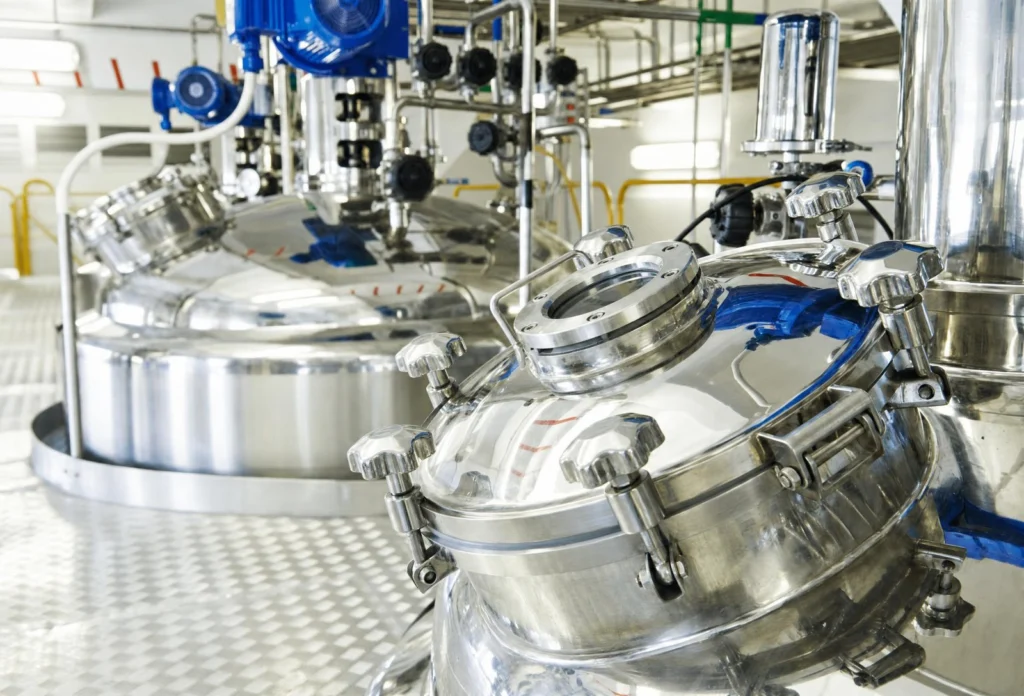
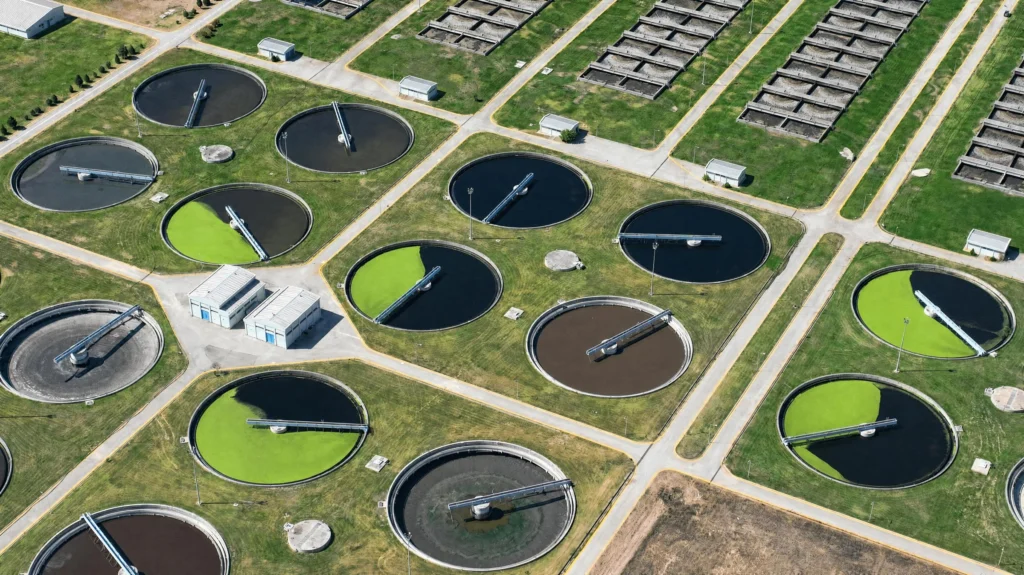
A residential complex and a manufacturing unit may both produce wastewater, but they do not necessarily need the same treatment plant. The difference begins with what enters the drain. Choosing equipment before understanding that water can leave a facility with a plant that handles the volume but struggles with the pollution load.
This guide explains the difference between a sewage treatment plant (STP) and an effluent treatment plant (ETP), and the questions a facility owner should answer before requesting a design.
The basic difference between STP and ETP
An STP treats sewage: wastewater associated mainly with toilets, bathing, washing and other domestic activities. An ETP treats industrial effluent: wastewater arising from manufacturing, processing, equipment cleaning and related operations. An industrial site may need both, depending on its separate waste streams.
| Question | STP | ETP |
|---|---|---|
| Typical source | Apartments, offices, hostels and domestic sewage within a factory | Production, washing, finishing and other industrial operations |
| Main starting point | Sewage flow and organic loading | Process-specific wastewater characteristics and variability |
| What can vary? | Occupancy, peak hours, grease and cleaning practices | Product batches, chemicals, salts, metals, oils and temperature |
| Design objective | Quality suited to the approved discharge or reuse route | Quality suited to the approved discharge, reuse or recovery route |
The labels describe the source and purpose; they do not specify one fixed process. Two ETPs can look very different because a food-processing wastewater and a metal-finishing wastewater present different treatment challenges.
How treatment works, in simple terms
Treatment usually combines several jobs. Screens intercept larger material. Physical separation removes settleable or floating solids. Biological treatment uses microorganisms to break down suitable organic matter. Chemical treatment can address particular contaminants. Further filtration and disinfection may be needed for the intended outlet. The San Antonio Water System treatment overview gives an accessible explanation of these stages for municipal wastewater.
For an industrial facility, the first question is whether a contaminant can be removed at its source. Keeping a concentrated process stream separate may create a more manageable treatment problem than allowing it to mix with every other drain. A process engineer should assess compatibility before deciding which streams can be combined.
Which test results matter?
A useful design brief includes representative laboratory results and information about when samples were taken. A single sample from a quiet day may miss a production washdown or a peak occupancy period.
- Flow: the amount of wastewater, commonly expressed in kilolitres per day (KLD), together with hourly peaks.
- BOD: biochemical oxygen demand, an indicator of the oxygen microorganisms use while breaking down biodegradable material under the test conditions.
- COD: chemical oxygen demand, a broader measurement of material that can be chemically oxidised.
- TSS: total suspended solids, the material suspended in water that may need separation.
- TDS: total dissolved solids, including dissolved salts that ordinary settling will not remove.
- Other parameters: pH, temperature, oil and grease, nutrients, metals or process-specific contaminants, selected by the engineer and laboratory.
These numbers answer different questions. Clear-looking water may still contain dissolved salts or microorganisms. Likewise, two flows with the same KLD can carry very different pollutant loads. Treatment selection should consider both quantity and quality.
What about a hospital, hotel or factory campus?
Map the drains before assigning a label to the entire premises. In a hotel, sewage, kitchen wastewater and laundry flows deserve attention within the design brief. In a hospital, specialised discharges require assessment alongside domestic sewage. At a factory, employee sewage and production effluent should be identified separately, even if an engineered combined solution is eventually selected.
Illustrative example: a factory proposes an STP for its staff facilities. Later, equipment-washing water is connected to the same inlet. Even if the daily volume remains below the plant’s rated capacity, the additional contaminants can change the treatment requirement. The sensible action is to reassess the wastewater, rather than assume that spare hydraulic capacity means spare treatment capacity.
What to share before asking for a quotation
- A list of wastewater sources and any existing drain layout.
- Measured or justified estimated flows, operating hours and peak conditions.
- Recent laboratory results, sampling locations and production details.
- The proposed reuse or discharge route and applicable consent conditions.
- Available land, access, electrical supply, nearby occupied areas and future expansion.
- Responsibility for operation, laboratory testing, sludge management and maintenance.
Ask each bidder to use the same design basis. A lower price is difficult to interpret if one quotation includes civil works, disinfection and sludge handling while another covers only the main treatment equipment. Our STP and ETP project planning checklist explains how to compare the scope.
Common questions
Can an STP replace an ETP?
Only if a qualified assessment shows that the proposed system can treat the actual combined wastewater and meet the required outlet quality. The name on the equipment is not evidence of suitability.
Does treated water automatically become reusable?
No. The intended use determines the required quality and safeguards. Read our guide to treated-water reuse, UF and RO before planning a reuse connection.
What should a Chennai facility do first?
Prepare a source-and-flow summary and arrange appropriate wastewater sampling. Enrec Engineers can discuss wastewater treatment requirements and the next steps for a site assessment. The final process should follow your facility’s data and applicable approvals.